
Friday, July 21, 2006

(Potentially relevant link)

Yahoo! Answers is funner than Google Answers because it has points. XP like E2, essentially. Unfortunately, it sucks big time. This is for several reasons, most of which boil down to lack of accountability. If you look at ten random questions, you'll likely find at least that many incorrect answers, and probably a fair number of 'i dont know'/'look it up's. The people posting such answers get two points for it, and lose nothing for being wrong or unhelpful. You can't downvote the person claiming only three countries ban flag desecration or the morons claiming allosaurus or tyrannosaurus rex as the largest meat-eating dinosaurs or claoming infinity is the largest prime number. Only occationally will you find the incorrect answer being chosen as best answer (an exta ten points), but posting an obviously incorrect answer shouldn't gain you any points.

In addition to the idiots giving and voting for incorrect answers, there's a more prevelant problem--though perhaps a less troublesome one: multiple (often ten+) people will post the same (correct) answer to a question. And I don't mean nearly at the same time so perhaps they didn't see the earlier answers. They can be hours apart, and the same one-word answer will be posted again and again. It's essentially spam, but not considered so by Y!A.

A third problem is that there's little to no community cohesion. On E2, I knew the people and they were--for the most part--friendly. On Y!A, people are relatively unknown and more often trolls than anywhere but Usenet.

Y!A's moderation is this: major abuses get deleted and good (and some bad) answers get extra points. But I could probably gain thousands of points a day just by doing what most people do: post the same, one-word, useless answer as everyone else on simple questions. The primary thing Y!A needs to change is moderation. Punish incorrect and repetetive answers instead of rewarding them.

Oh, and while I'm complaining, it's filled with useless/poorly-formed questions. But that's not quite so bad since you don't gain points for posting questions. (Actually, you lose them, but then regain them when you pick the best answer)
Thursday, July 20, 2006

(Potentially relevant link)

A book by Brigid Brophy, Michael Levey, and Charles Osborne.

I haven't read it, but I've read the E2 node a few times. Summary: here're fifty books that have been parodied and rehashed and made tribute to so many times that we recognise any references to them without needing to read them.

Is it true? I don't know. /Hamlet/ is on the list, and you don't need to have read that to be very familiar with it, but I don't recognise many of the titles on the list. I guess its about their being alternate works to which to redirect the references, not there being common knowledge about them.

That's all. I just felt like posting something here, and that's what I came up with. Sorry.

Friday, June 16, 2006

(Potentially relevant link)

My Intro CS textbook--Computer Science: An Overview (6th ed.1) by J. Glenn Brookshear--described, among other things, the GIF image format. According to it, GIF compression consists entirely of limiting images to 256 colours (as opposed to BMPs which aren't compressed). Of course, as someone who wasn't completely clueless, I knew essentially how GIF compression worked and that BMPs can use 8-bit colours, or even 2-bit colours.2

What I didn't know until today was that GIFs can in fact be more than 256 colours. That's amazing. (Note for people like me who have animations deanimated: the true colour GIF at the above link is an animation.)

1 I think 7th ed. was recommended, but those of us who'd bought the used copies had 6th ed. and that was fine too--so long as we noted this one error in this one table we used. I later got a 4th ed.

2 My professor, of course, was fairly clueless. He was in IT, and while he may be a good IT person, his C code would contain lovely keywords like 'If' and 'While', he told us i/5 + i%5 would give us i/5.0, and probably other nutballish things. A nice guy, though, and I believe fairly competent at his job when it doesn't consist of teaching courses outside his area.

Thursday, May 25, 2006

(Potentially relevant link)

People who say the above are wrong.

  • Orange is the best colour for your box of laundry detergent in order to maximise sales.
  • Orange is the best colour for emulating the Luna scheme.
  • Orange is the best colour for camouflaging yourself in a jungle.
  • Orange is the best colour.
The above are all predicates, and predicates are true, false, or nonsense, but never more than one of these. (In this case, probably true, true, false, and false or nonsense).

Now, many fools such as Foo will protest that orange is indeed his favourite colour and therefore the best colour. If I favour blue, though, Foo will contend that we're both right, but he's denying one of the fundamental principles of logic (and despite what silly people will claim, logic applies perfectly to every aspect of the world).

Now, if I say 'blue is my favourite colour' and Foo says 'Orange is my favourite colour', then we can both be right about those respective claims, because they're different claims. And perhaps if you claimed 'Orange is the best colour to show Foo when he asks to see the best colour', you'd be right because Foo is an idiot who doesn't yet buy my claim and no one wants an angry Foo yelling at her for showing the 'wrong' colour. But 'Orange is the best colour' isn't relativised to the person. It's stated in absolutes, just like 'Jupiter is the largest planet in our solar system'. True. Not just True-for-Wesc, but True.

Due to our inability to distinguish between 'best' and favourite, we don't like that answer--and by 'we' I mean Foo. I like the answer. I wrote the bloody answer. People mostly do redefining of terms this with normatives like 'best', 'better', 'worse', etc. But why do they object to my labelling it false/nonsense on the grounds of best not applying to colours1? If I claim 'Jealousy is the heaviest emotion'--with 'heaviest' not being any silly metaphor, but something along the lines of 'having the most physical mass'--they'll not say 'Oh, you're right, because weight/mass doesn't apply to emotions2'. Instead they'll claim it's false/nonsense. The same response I give to the colour evaluation.

Opinions are about predicates and are right or wrong. Preferences are neither right nor wrong, predicates about preferences are. I've had to defend this claim countless times (including to Dr. Hettche, one of my philosophy professor).

1 I confess that 'best' may apply to colours, but if so, you probably determine the best by enumerating how much people like each one how much.

2 Anyone who wishes to butt in with a comment cashing out emotions in terms of chemicals and electronic impulses is welcome to do so only after they've come up with a better analogy for me to use.

Saturday, April 22, 2006

(Potentially relevant link)

Beaufort Country's favourite racist is running for the NC Senate. I just received word through the mail. Begins the letter, 'Dear Fellow Republican'. (I am not a Republican. I'm a registered Independent.)

He also includes a page titled 'Part of an Interview with The N.C. Conservative'. The last question is:

8) Senator Basnight was a strong supporter of Julia Boseman in her race for the 9th Senate District. Does Basnight support gay marriage (Boseman's key issue)?
From where I'm sitting, Basnight's behaviour supports gay marriage. He supports Julia Boseman who supports gay rights. He does not support the constitutional amendment to ban gay marriage. The constitutional amendment is the only way to keep activist judges from giving us gay rights. Boseman is a lawyer. Scary isn't it?

Poor Mr. Richardson is being given gay rights. :-(((

(Anyone remember the days when constitutions were articles about increasing personal rights?)

Friday, April 14, 2006

(Potentially relevant link)

People are always having such trouble thinking about space, so during a debate once I wrote this introduction (very slightly edited). It's not super!well written, but it's something. Enjoy:

Intro to the meaning of 'Universe'

There are two ways of thinking about the universe .One is that it's everything, as the good Toilet1 said. The other is the big blob of space expanding outwards from the point of the Big Bang.

People usually don't distinguish between the two, because usually we say they are the same thing.

Getting a grasp on the concept of 'space'

Imagine two things as close together as possible. There is no room between them at all. They are touching--at the subatomic level if you need think of it that way.
Now imagine: There's a large solar system in between the two things.
That's right, a large solar system between two things that have no space in between them. So the solar system isn't in space. Does that make sense? For the moment, let's say no. After all, 'in' or 'next to' or 'between' are all in spacial terms: if something is between two other things, it is in the space between the two things.

Now think about the 'edge' of space. Beyond that is just like between the two touching things: there is no space past it, because it's the edge. Now, does it make sense to say there's another thing past the edge? No, there's nowhere for it to be. It's just like being between the two things. And we said that makes no sense. (But maybe we lied.)

Metaspace

The problem most people have is that they can't think except in terms of space. They can't imagine something (like the universe) not being somewhere. So they tacitly and unconsciously make up a 'metaspace' that contains normal space. If you do that, the normal big bang space is at some metalocation and there could be another big bang space at another metalocation. This makes it all very easy to talk about such things. Unfortunately, it makes it easy to talk about them incorrectly, because people don't notice that they've gone from normal space to metaspace.

Suppose you have a nice big metaspace*, and inside it there are two big bangs. One of these big bangs is fortunate enough to have us in it, and the other is a bizarre place filled with tree frogs (but no trees, sadly). Suppose we wanted to rescue these unfortunate tree frogs by flying our infinitely-fast spaceship to their space and supplying them with lots of trees. Where do we fly to?
This ship is just like your car. Sure, it's faster and can fly, but it's the same in that it only travels through normal space. It can't take you to the solar system between to touching objects, because that's somewhere in metaspace, not in our normal space. And it's the same with the frogspace: you can't fly off the edge of normal space, because then you're flying in metaspace, which is an entirely different thing.

Turtles

Our happy big bang space is in metaspace, riding on two strange creatures, known as metaspace turtles. We know they're turtles because they have shells on their backs and go really slowly, but don't look at all snailish.

Reality

So we can't leave our normal big bang space, and things outside our normal big bang space can't come in.
So what is it that makes the other things real?

Footnotes

* Of course, if we really truly need a metaspace, then we also need a metametaspace, and a metametametaspace, and so on. How irksome!

Credits

General Wesc: better than Hawking and twice as pompous.2

Blogspace Footnotes

1 The user Toilet of Doom posted earlier on the topic.

2 I originally posted this on eCritters using my 'Isaac Asimov' account rather than my Wescian account.

Sunday, April 09, 2006

Suppose you're walking down the street one day and someone you've never met comes up to you and asks 'Want to be friends?' With what do you respond? 'Yes'? 'No'? 'Define friends'?

If you haven't frequented the right websites, you may think this is a fanciful situation, but it happens daily on sites like eCritters.biz. Actually, I haven't gotten one of these requests for over a week, I think. Amazing. I used to get several each day.

For a while, I was explaining to them why their question was stupid, with something along these lines:

One doesn't become a friend by fiat. You have to get to know the person. If you like them (and they you), you'll become friends over time.
Problem: they respond by asking 'asl' and upon receiving an answer, deciding they now know enough about me to be my bste buddy ever.

I could explain another way:
It's stupid to just decide to be friends with some total stranger. You could be a mass murder. I know nothing about you.
Problem: These idiots think I just called them stupid and a mass murderer. I could put it on myself:
You don't even know me. What if I'm a mass murderer?
Problem: Apparently saying anything like that is 'meen'.

I've tried asking them if they went up to total strangers in real life and asked such things. They told me 'yes' and continued to bug me.

So explaining is a bad thing. Just 'no' then? That works, but they ask why and they get offended and, anyway, I'm not opposed to being their friend. I just think it's stupid to do it this way.

But the best answer is one you might not expect. If you want to be left alone, say 'yes'. Okay, sometimes they'll try to talk to you then, but very often they'll say 'ok', list you as a friend, and never speak to you again. Hallelujah!

Also, it's worth noting that these requests are often sent directly to me, but sometimes are posted on the forums as an open request for friends. Once when somebody posted 'I'll be friends with anyone' I created the account 'Adolf Hitler' and replied to test their resolve.

Friday, April 07, 2006

If you said 'no', you're probably one of those annoying pseudo-intellectuals trying to sound smart (and failing). Please stop.

When I say 'yes'--the correct answer--people assume I'm being all naive and not understanding the point they're trying to make. The truth is their point is stupid. Lemme asplain:

Sound is not in your head. I know, you think you're super-clever for pointlessly redefining this common English word (and scientific term) in terms of qualia1 instead of the physical phenomenon it really is, but you're really not. Crack open a dictionary, or an encyclopaedia, or a physics textbook. It will tell you that sound is vibrations. Physical. Not mental. Stop redefining this word. You're not Locke2.

Some of you more clever people may object, 'Oh, no! you misunderstand: I'm an idealist3'. Tell me, then, Mr. Idealist, if no one is around, how is there a tree to fall? You could, of course, explain that God is always in the Quad, but now you seem to be arguing that God is deaf. I don't buy that.

1 Being an annoying pseudo-intellectual, you probably don't know what 'qualia' means. Well, it's what you're redefining 'sound' to refer to. The 'what it's like' in your head.

2 Locke annoys me so I take cheap shots at him whenever possible. (Anyway, I'm sure he did something immoral at some point in his life so it's okay to treat him like a rabbit wolf and off him2b.)

2b Doubleshot!

3 The less clever of you probably think I mean I-think-things-should-be-perfect idealist. I don't. I mean Barkley. Imagine The Matrix without the computers. The entire world is nothing but ideas or perceptions in our minds. Yeah, you think it's a stupid idea (or maybe you've decided to believe it because it'll make you sound clever). Please go read something by Barkley before doing either of those. It's a lot more sophisticated than you or Sam Johnson take it to be.

Sunday, April 02, 2006

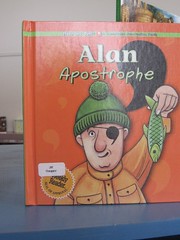
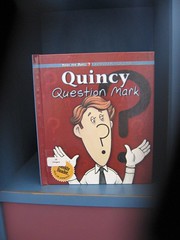
I was in the public library earlier today and I spotted a couple books which I am now ordering everyone on the Internet to read:
Alan Apostrophe Quincy Question Mark

Meet the Puncs or suffer my wrath!

Thursday, March 23, 2006

Some time ago I came across this formula for checking if an integer is a power of two: ((n & -n) == n)

Upon seeing this, of course, I noticed that it was wrongwrongwrong. So I popped into IRC to ask my brother to agree with me, which he did:

(17:00:58) lkbm: One thing iss telling me that '((n & -n) == n)' will check if n (a signed integer, I assume) is a power of two, but wouldn't 0 & -0 == 0?
(17:02:30) Miciah: Absolutely.
(17:02:40) Miciah: Why don't you write some C to try it?
(17:02:49) lkbm: Doing so right now.
(17:02:55) lkbm: Haven't done C in a year.
(17:03:50) Miciah: It is easy stuff.
(17:04:07) lkbm: 'var n = 0;' is wrong.
(17:04:16) lkbm: Let's try 'int n = 0;'
(17:04:17) Miciah: C wants types.
(17:04:39) lkbm: It also wants my "s to match.
(17:04:50) Miciah: If they aren't escaped or quoted,
(17:04:56) Miciah: ...or commented.
(17:05:00) lkbm: Right. Looksl ike we're right though.

Of course, it works for all values but one, and it's trivial to fix. What cleverness.

Oh, and for you ignorant people wondering why it works, look up 'two's compliment' and keep in mind that '&' is a bitwise and.